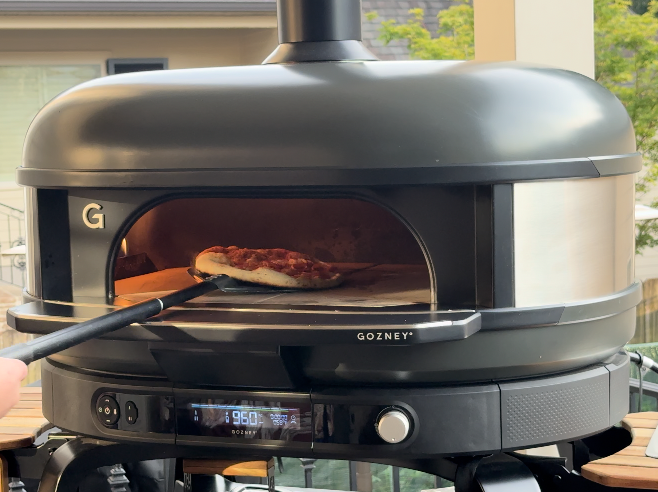
Around the Gravy & Fire household, Friday night is completely sacred (or Saturday depending on kids activities these days). The rules are non-negotiable: the movie choice is on a rotating schedule, the backyard pizza oven is lit, and nobody gets to eat until the dough is stretched and blistered.
But our weekly Sourdough Pizza and Movie Night was also a high-stakes arena of heavy negotiations.
First, there’s the movie choice. Dad wants an inappropriate comedy movie from the 80s / 90s. Gravy wants a funny animated movie, potentially with a sing-a-long scene or two. Brother wants Jurassic Park for the 100 time and Mom just wants to take a nap. The result turned into a rotation schedule where one person picks the movie and there are no complaints or negotiations allowed.
Then, there’s the sauce. If you let Dad handle the red sauce unsupervised, he’ll treat a pristine San Marzano base like a backyard crawfish boil. Gravy’s main job during prep—outside of slapping the dough—is slapping Dad’s hand away when he reaches for the cayenne pepper.
“This is Neapolitan, Dad, not a seafood boil!” is the weekly battle cry. (Don’t worry, we always leave a shaker of pepper flakes or fresh ghost peppers from the garden on the picnic table for him anyway).

The Power of 48-Hour Sourdough Crust
If you’ve ever tried making homemade pizza dough and ended up with a crust that tastes like stale white bread or has the dense, gummy chew of a wet sponge, you’re missing two things: wild yeast and patience.
Using an active sourdough starter doesn’t just give the crust its signature complex, tangy flavor—it breaks down the gluten over a slow 48-hour cold fermentation in the fridge. This slow ferment creates those beautiful gas pockets in the rim (the cornicione) that puff up instantly when they hit the intense heat of a wood-fired oven. It also makes the crust incredibly light, airy, and much easier on your stomach.
However, life takes over sometimes and you might forget to prep. This recipe works great as a same day pizza, you just end up with slightly less flavor in the dough.

Ultimate Sourdough Pizza
Ingredients
Method
- Step 1: Mixing & Bulk Fermentation (The Day Before)
- Mix the Autolyse: In a large mixing bowl, combine the flour and warm water. Stir until no dry flour remains. Cover and let rest for 30 minutes.
- Add Starter, Yeast, and Salt: Add your active sourdough starter, instant yeast, and salt into the dough using wet fingers. Squeeze and fold the dough until completely incorporated and smooth; roughly 10-15 minutes. Add in optional olive oil at this step. If you have a stand mixer, mix at low-medium speed for 5-10 minutes.
- Initial Rest: Cover the dough and let it rest at room temperature 30 minutes
- Shape Dough Balls: Divide the bulk dough into 4 equal portions (approx. 170g each). Pull the edges of each portion into the center to create tight, smooth round dough balls.
- Bulk Rise (Short Nap): Cover and let the dough rise at room temp until it increases in volume by roughly double and feels full of air bubbles (usually 3-4 hours depending on your starter strength and kitchen temperature).
- Alternative : Portioning & Cold Ferment (The Long Nap)
- Shape Dough Balls: Divide the bulk dough into 4 equal portions (approx. 170g each). Pull the edges of each portion into the center to create tight, smooth round dough balls.
- Cold Fermentation: Place the dough balls into lightly oiled individual containers or a proofing tray. Seal tightly and place them in the refrigerator for 24 to 48 hours. The longer cold ferment is where that deep, sweet sourdough flavor develops!
- (if cold fermented) Warm Up: Remove the dough balls from the fridge 2 to 3 hours before cooking. They must relax and reach complete room temperature before stretching.
- Prep the Sauce: Hand-crust or lightly blend your San Marzano tomatoes into a bowl. Stir in a small pinch of sea salt. No fancy herbs, no cooking—just pure, simple tomato goodness. We also add in an Italian herb pizza blend to the sauce occasionally.
- Stretch the Dough: Dust your workspace with semolina or AP flour. Gently press a dough ball out from the center using your fingertips, pushing the air bubbles toward the outer edge to form a distinct rim. Flip the dough over the backs of your hands and stretch gently until the center is thin and translucent. Lay flat on your dry, dusted launch peel.
- Top Lightly: Spread a thin ladle of crushed tomatoes, mozzarella, and the toppings of your choice. Shake the peel to make sure it doesn't stick!
- Fire up your pizza oven until the center of the stone deck registers a screaming 900 degrees on an infrared thermometer. Home Oven: Set to highest temperature available (500-550 degrees).
- Once to temp, slide the pizza off the peel and land it dead center on the hot stone. Watch it bubble up! Bake for 60 to 90 seconds, using a turning peel to rotate the pizza throughout cooking to ensure an even blister and beautiful leopard spots.Home Oven: slide onto stone / steel and cook for 3-5 minutes.
- Pull the blistering hot pie, garnish with fresh basil, drizzle with extra virgin olive oil, slice with a sharp rocker cutter, and serve immediately!
Video
Notes
🙋♀️ SOURDOUGH PIZZA NIGHT: FAQ
Why is my sourdough pizza dough snapping back when I try to stretch it?
Your dough is too cold or hasn’t rested enough! When gluten is cold, it tightens up like a rubber band. Always pull your cold-fermented dough balls out of the fridge at least 2 to 3 hours before you plan to bake. They should be completely at room temperature, soft, and relaxed. If it still snaps back, cover it with a damp cloth, let it rest for 15 minutes, and try again.
Can I cook this in a standard kitchen oven?
You can! But you’ll need a heavy baking steel or a thick pizza stone. Place your steel on the top rack of your oven and preheat it at your oven’s absolute maximum setting (usually 500 or 550 degrees) for at least one full hour. Switch to the high broiler setting right before you launch the pizza to mimic the radiant top-heat of a wood fire.
My pizza is sticking to the peel. How do I get a clean launch?
Moisture is the enemy of a clean launch. First, make sure your peel is completely dry. Dust it with a semolina flour or AP flour. Once you lay your dough down, work quickly! Build your pizza in under 60 seconds, and give the peel a gentle back-and-forth shake after every topping to make sure the dough is still floating freely on the flour.